Not all brake pads are created equal. Beyond the friction material itself, the way a brake pad is manufactured plays a major role in how it performs, how long it lasts, and whether it ends up back in your bay sooner than it should. Understanding the difference between positive molding and flash molding can help you make smarter decisions about the parts you’re putting on your customers’ vehicles.
What Is Flash Molding?
Flash molding is the more common and cost-effective method used to produce brake pads. In this process, friction material is placed into an open mold cavity and compressed under heat and pressure. Because the mold isn’t fully enclosed, excess material escapes around the edges during compression. That excess is called “flash,” which is where the process gets its name. The flash is then trimmed off after the pad is formed.
While this gets the job done, the open mold design means there’s less control over how evenly the material is distributed and compressed throughout the pad. The result? You can end up with inconsistencies in material density from one area of the pad to another. Over time, that can translate to uneven wear, noise issues, and less predictable braking performance – the kinds of things that lead to comebacks and unhappy customers.
What Is Positive Molding?
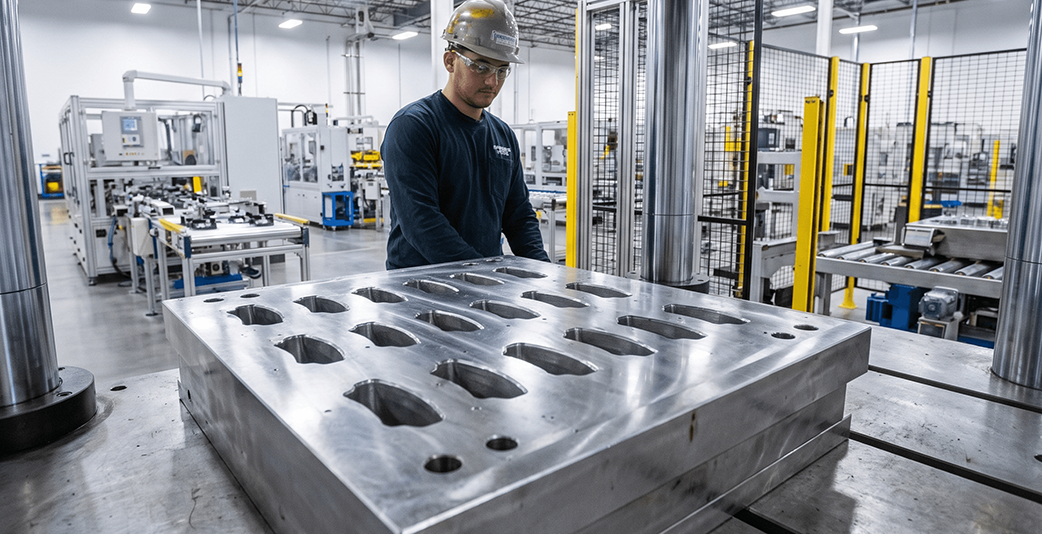
Positive molding takes a more precise approach. In this process, the friction material is compressed inside a fully enclosed mold, meaning none of the material escapes during formation. The friction material remains fully contained and is compressed uniformly under controlled heat and pressure.
This closed-mold method delivers a few key advantages that matter when the pad meets the rotor:
- Consistent Material Density: Because the material has nowhere to escape, it’s distributed and compressed evenly throughout the entire pad. That means more consistent contact with the rotor surface.
- Stronger Bond to the Backing Plate: The controlled compression helps create a more reliable bond between the friction material and the backing plate, reducing the risk of delamination or separation over time.
- More Predictable Performance: A pad with uniform density wears more evenly, performs more consistently, and is less prone to noise, giving your customers a better experience behind the wheel.
Why It Matters in Your Bay
As a tech, you know that what’s inside the box matters just as much as what’s on the label. You’ve probably seen the difference firsthand – pads that wear unevenly, glaze prematurely, or start making noise well before they should. In many cases, those issues trace back to how the pad was made in the first place.
When you’re choosing brake pads for a job, understanding the manufacturing process behind them gives you an edge. It’s not just about grabbing what’s on the shelf; it’s about knowing the part you’re installing was built to perform as it should and protect your customers’ investments. That’s fewer comebacks, more customer trust, and a stronger reputation for your shop.
The ADVICS Difference
ADVICS ultra-premium brake pads are manufactured using the same positive molding process as ADVICS original equipment (OE) brake pads, bringing the same proven manufacturing approach to the aftermarket. As a result, they deliver consistent density, reliable bonding, and dependable performance. Engineered to meet OE specifications, they’re designed to perform the way your customers’ braking systems were intended, giving you confidence with every installation and your customers confidence every time they hit the pedal.
Learn more about ADVICS brake pads on our product page.
Looking for more tech tips? Visit our Technical Resources page for more insights to help you work smarter in the bay.